
Canada, a major energy producer, has become the first country to quit the Kyoto Protocol on climate change, saying the 1997 accord was an 'impediment' on cutting global carbon emissions with top emitters like the United States and China not covered by it.

As hopes for any deal on global warming dims at the Cancun meet later this year, United Nations climate chief Christiana Figueres on Wednesday made it clear that the Kyoto Protocol will continue post 2012 as a second protocol since it does not have a 'sunset' clause.

The Kyoto Protocol is the "make or break" issue for UN climate talks in Cancun, Environment Minister Jairam Ramesh said, as he pointed not only Japan but many other countries are opposed to continuation of the treaty that legally binds industrialised nations to reduce greenhouse gas emissions.

Chairperson of Ad Hoc Working group on Kyoto Protocol, John Ashe, said parallel negotiations on the Kyoto Protocol are being carried on at the conference and will be wrapped on December 15 after which a report will be presented.

The Conference of Parties must come up with a successor to the Kyoto Protocol which expires in 2012.

Rajendra Pachauri, head of the Intergovernmental Panel on Climate Change of the United Nations said the developing countries, including India and China, are unwilling to sign up a new global climate change pact to replace the Kyoto protocol in 2012 as the rich world has failed to set a clear example on cutting carbon emissions. He said rich countrieslike the US, had failed to take the action needed to convince developing nations to sign a deal to help stabilise emissions.

He said the coastal and deltaic regions of India are reported to be vulnerable to the risks of flooding.

India and Africa on Wednesday asked the developed counties to take "ambitious actions" to reduce their greenhouse gas emissions and also provide finance and technology to the developing counties so that they could effectively address the impact of climate change.
Five top United Nations officials have urged world leaders to "seal the deal" at Copenhagen in December on an ambitious new climate change pact aimed at curbing greenhouse gas emissions.

Worse still, the cities ranked second, third and fourth for their poor air quality are also in India.

With the weaker-than-expected agreement at the recent Climate Change Conference at Lima, there is an urgent need to highlight endeavours in civil society and business for a sustainable global economy with grassroots empowerment, say Rajni Bakshi.
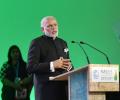
PM Modi cautioned against any unilateral steps that will lead to an economic barrier in the battle against climate change as he hoped that the developed countries would mobilise aid.

Senior journalist Darryl D'Monte reports exclusively for Rediff.com from Paris.
One hundred-and-ninety-two countries have signed the climate change convention.

The prime minister's comments come close on heels of the developed countries threatening to cut vital aid to the developing nations if they do not back the deal agreed at the UN climate summit in Copenhagen.

"It (clear future direction for carbon markets) also indicates a new lease of life for Clean Development Mechanism (CDM), especially in the Indian context where this market mechanism under the Kyoto Protocol has been a catalyst for enhanced action on climate mitigation by Indian industry," industry body Ficci said.

The Bangkok talks are a last chance to sign a deal to replace the Kyoto Protocol, whose first commitment period expires in 2012.

Indian environment minister Jairam Ramesh said he was 'happy' at the development and believed it to be the result of 'sustained pressure brought to bear by developing countries'.
The United States has said post-Kyoto protocols to tackle climate change will not make any sense if India and China are 'given a pass' and that Washington will not be a signatory to any such framework if the two Asian giants are not on board."The international community has got to come up with a new plan. And if we give a pass, again, to India and China,whatever measures we take are going to be totally cancelled and overshadowed,"Deputy Secretary of State John Negroponte said
A 35-member team represents India at the world's biggest climate change conference at Copenhagen.
Being one of the most ecologically modernized state in the world, Japan heads to Copenhagen with its ambition of green leadership in the post Kyoto regime. Japan has nurtured this ambition through smart diplomatic endeavors, ecological restructuring of policies and technological innovations.

With hopes for a far-reaching deal on climate change receding, India is making a strong pitch for extending the Kyoto Protocol beyond 2012 and commitments that legally bind developed countries to reduce emissions.
Pushing for a legally binding substantive outcome at the Copenhagen climate change meet, Prime Minister Manmohan Singh on Saturday said India is willing to sign on to an ambitious global target for emission reduction or limiting temperature increase, if it is accompanied by an equitable burden-sharing paradigm. He denounced attempts by some developed nations to junk the Kyoto Protocol on greenhouse gas emissions.

Obama has made combating global climate change a top priority of his presidency

The international climate change talks, which started in Copenhagen today, will see a 35-member official delegation from India. The attempt will be to negotiate a new global climate treaty to replace or extend the 1997 Kyoto Protocol beyond 2012.

A survey of 40 firms suggests that there's money to be made fighting climate change.
Ramesh expressed deep concern about the US offer to reduce carbon emissions by 17 per cent from 2005 levels.
India's JSW Steel has been awarded more than 5.4 million carbon credits, including four million carbon credits in the single largest issuance of emissions permits to a Kyoto Protocol project, by the United Nations.
Even if the leaders can't negotiate a binding agreement, many countries hope to work out commitments to reduce their greenhouse-gas emissions and provide assistance to poorer countries likely to be hardest hit by the effects of global warming.

COP 21 is about how much carbon space is left and who gets how much of that space

The conference has to agree on a draft agreement which would form the cornerstone of a historic deal to be signed in Paris in December 2015 and take effect by 2020.

The two-day G20 Summit saw the Indian side making "significant contributions" on resolve to counter terrorism and boost global trade and investment.
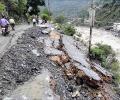
About 190 nations agreed on Sunday the building blocks of a new-style global deal due in 2015 to combat climate change amid warnings that far tougher action will be needed to limit rising world temperatures.

Trump's diatribe against India in his speech on the Paris Agreement is hard to explain, especially when a Modi-Trump meeting is supposedly on the cards, says Ambassador T P Sreenivasan.

We lost the gains of Rio and Kyoto in Copenhagen and Paris, but it would have been worse, if any mandatory restraints were imposed on our green house gas emissions, says Ambassador T P Sreenivasan.
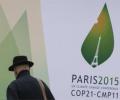
The new agreement, will be negotiated and once it is sealed it will also be judged

New text is "ambitious and balanced"
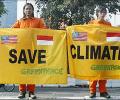
India working towards devising strategies to reduce global warming.

India reaffirmed its commitment to the landmark Paris climate change agreement.
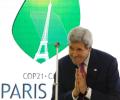
If Paris really meant to serve as a landmark in recognising equity in climate negotiations, it should have heralded the second phase of the Kyoto protocol. Instead we have all countries, India and China included, all signing up with voluntary commitments in what can only be seen as a race to the bottom, reports Darryl D'Monte.
